
Prosody
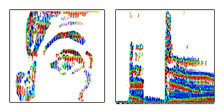
The investigation of prosody in Israeli Sign Language demonstrates that sign languages have comparable prosodic systems to those of spoken languages, although the phonetic medium is completely different. The research led by Wendy Sandler has presented evidence for prosodic constituents in ISL and established that facial expression in sign language plays a role similar to that of intonation in spoken language. Similarities as well as interesting formal differences between the intonation of spoken and signed language offer a new perspective on the relation between the phonetic basis of language, its phonological organization, and its communicative content.
Lexicon and Morphology
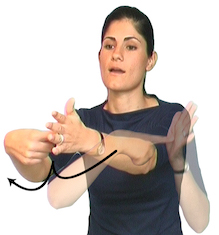
Signs in sign languages have internal morphological structure, like words in spoken languages. Yet sign languages favor a specific type of morphology, the simultaneous, non-concatenative type. Verb agreement is an example. By applying a particular componential analysis of verbs in ISL, Irit Meir develops a model which can predict the agreement pattern of each verb in ISL and other sign languages, and, at the same time, can pinpoint the similarities and differences between the spatial predicates of ISL (and sign languages generally) and the auxiliary and verb systems of spoken languages.
By examining both the common non-concatenative type of sign language morphology as well as the rare but attested sequential affixation in these languages, our work identifies properties that make sign language a morphological type.
Village sign languages of Israel
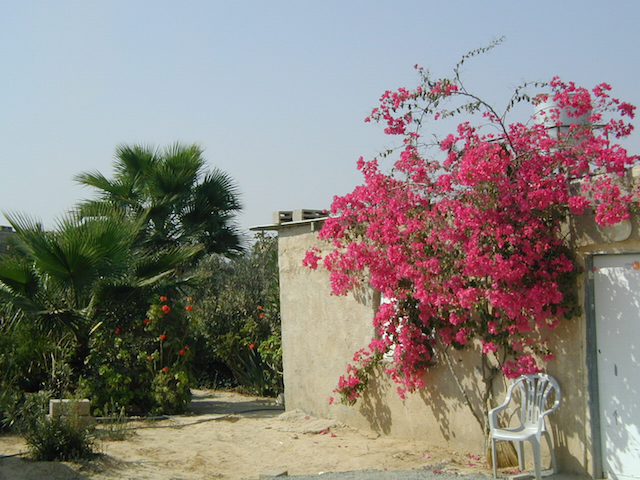
Apart from Israeli Sign Language and Al-Sayyid Bedouin Sign Language, we have learned that there are a number of other sign languages in towns and villages in Israel, prompting a colleague to nickname Israel ‘the Papua New Guinea of sign language’. That may be an exaggeration, but it helps to make the surprising point that there are at least six village sign languages alongside the national sign language, in a geographical area smaller than the U.S. state of New Hampshire.
NEWS
coronavirus book in Israeli Sign Language ספר ילדים בשפת הסימנים הישראלים על וירוס הקורונה "Deaf Communities: Past, Present and Future", symposium in memory of Irit Meir, February 25, 2020…
Sign Language Research Lab (8)
About Us In our work, we use sign language to learn about language in two ways. One way is to strip away the…
Sign Language Research Lab (7)
About Us In our work, we use sign language to learn about language in two…

- Go to the previous page
- 1
- …
- 78
- 79
- 80
- 81